0800 0614 333
//

Blog

The latest from albapay

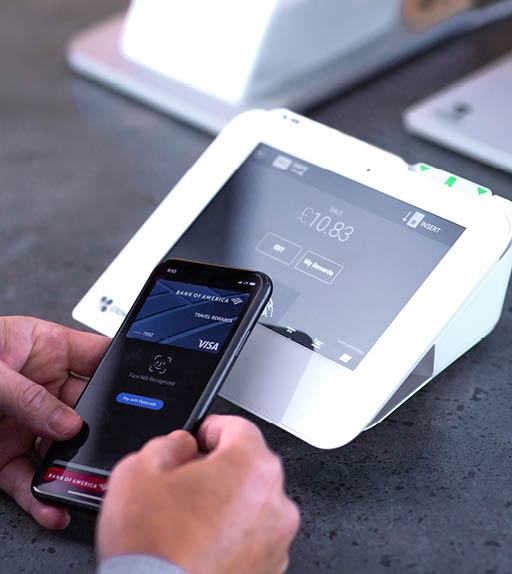
man making card payment
How to Minimise Credit Card Processing Charges

Offering contactless payment taking, or at least card payment facilities, is essential for the modern business with over 90% of all retail sales now conducted using card instead of cash.

The Covid-19 pandemic that began in 2020, changed our world in so many ways, and nowhere was this more evident than in the behaviour of consumers and the economy.

Many businesses have felt the pinch in recent times, particularly those with physical premises, as energy bills and the cost of goods has skyrocketed at a devastating rate.

Adapt or die is the name of the game and saving money wherever possible is essential to the success of the modern business. Not only must you offer as many payment methods as is realistic and suitable for your business, you must keep processing and hosting fees to an absolute minimum.

At albapay, we specialise in helping businesses across Scotland to do exactly that, providing them with everything from payment taking mobile card terminals to integrated EPOS systems from which they can manage their entire operation.

One of the biggest concerns we hear from our new clients is that their credit card processing fees are going up, cutting into their profit margins and limiting their potential for growth.

This was compounded in recent times by repeated increases in card payment transaction fees from companies such as Dojo who once offered some of the best value deals on the market.

Once upon a time, smaller shops often had a minimum transaction fee of £5 or so to ensure that they remained profitable but with consumers increasingly expectant of being able to pay for everything with card this is no longer a realistic option.

To help you minimise the impact of credit card processing fees on your business, we have put together this guide to the best way to keep them to an absolute minimum.

Types of Processing Fees

There are actually several different types of card processing fees to be aware of. Understanding exactly why you are being charged, and what for, is the key to reducing their impact.

Payment Gateway Fees

If you take online card payments, and you should, you need a payment gateway, acting as a third party between your account and the cardholder’s bank to process online sales.

The exact fee will depend on your agreement with the Gateway provider, with most agreements being fixed rates dependant on the number of transactions made.

PCI Compliance

Many of the fees on this list may seem unnecessary and simply a way for card companies to make money. PCI compliance fees are not one of them and provide an important role in protecting customer data, ensuring that it is safely transmitted.

Chargeback

If a transaction is reversed, customers can request a chargeback from their bank for any transactions they do not recognise, you can lose some, or all of the money from a sale. Unfortunately, the bank tends to often come down on the side of the customer in these situations.

MMSC

A Minimum Monthly Service Charge (MMSC) is a fee that is charged by card processing companies to cover themselves in the event of a low number of transactions. If you fail to meet an agreed threshold for sales in a month you will be charged this fee.

Set Up Fees

The cost of installation, setting up your transaction processing account, etc.

5 Ways to Keep Fees to a Minimum

Tip #1 Do Your Research

Many card processing companies are sneaky about the way their charges are structured, including extortionate MMSC fees that can be a pretty nasty surprise on a month when business has been difficult to come by in the first place.

Before agreeing to anything, or signing any contract, make sure to go over the fine print of the providers services to understand exactly what it is that you getting yourself into.

Tip #2 Back Your Business

If you are confident that your business is going to thrive and grow in the coming months, you might wish to opt for bulk processing agreement where you are able to achieve lower transaction fees as long as you achieve a certain number of sales.

Rates of under 1% are available, but only for certain businesses with a large number of transactions made.

Tip #3 Build a Custom Deal

Every business is different, so why would their card processing agreements be the same? Always choose an account provider that offers bespoke packages designed for your business type and that can expand as your business does. At albapay we specialise in creating these bespoke packages for all different sorts of businesses and would be delighted to hear from you.

Tip #4 Minimise risk

This might seem a bit contradictory given one of the other tips on this list is to bet on your business but this doesn’t mean you have to put the future of your company at risk. Try to avoid ‘risky’ transactions such as mail orders wherever possible, and look for agreements that have sufficient cover in place should your company go through a period of low sales, for whatever reason.

Tip #5 Use albapay

At albapay we specialise in providing our clients with low cost high quality payment gateway and payment taking solutions, with some of the cheapest installation and processing costs anywhere on the market.

financing blog image
A Guide to Buy Now, Pay Later (BNPL) Technology

Buy Now, Pay Later (BNPL) technology is exactly what it sounds. It is technology that allows you to offer your customers the option of purchasing your goods or services without having the pay the full amount up front. 

For the seller, the main attraction of Buy Now, Pay Later technology is to enhance the experience of your customers and being able to offer a variety of different payment options, increasing the chances that they proceed with a potential purchase.

Providers of both products and services universally note a marked increase in conversion rate following the implementation of a BNPL system.

BNPL has become the new norm in many industries but many companies are so busy that they haven’t had the chance to look into the required technology properly.

In this blog, we will look at exactly what BNPL involves, what technology you need to offer it, and the pros and cons of doing so.

How Does BNPL Work?

The concept of BPNL is simple:

  • The customers likes what they see on your website or in person and decide they want to go ahead with a purchase.
  • They proceed with the order and reach your point of sales where they are presented with one or more payment options.
  • They choose BNPL, specifying the number of payments they will make, when they will make them, and how much they will be. These are normally pre-set by the provider, with several options given.
  • A soft credit check is carried out to ensure the customer is eligible and can be relied upon to meet their payment obligations.
  • The transaction is processed and the BNPL provider provides you, the merchant with credit for the full amount.
  • The customer received their product/services in full.
  • The customer makes the agreed payments until the full amount has been paid.

Why is BNPL Better Than Credit Cards?

You might be thinking that all this sounds pretty similar to a credit card payment, albeit payments can be split into instalments.

There are certainly similarities between the two, but BNPL is often a more attractive choice for the customer. Interest rates tend to be lower for a start, and the majority of BPNL providers only conduct a soft credit check before approving payments, compared to the hard credit check conducted by credit card companies that can have a negative impact on your credit score.

Benefits of BNPL

BNPL is fast becoming a must have for companies serious about maximising growth. Here are just some of the reasons that your company should be offering BNPL as standard on your products and services.

Avoid Being Left Behind

You know just how small the margins are in your industry between securing a sale and seeing it slip away into the pockets of a competitor.

Failing to offer BNPL could make all the difference, something that we see time and time again with our customers who report a significant increase in conversions at the point of sale once additional payment options are offered. 

Simplify the Process

The fewer hurdles between your customer and their purchase the more likely they are to proceed and the fewer opportunities they have to change their mind.

Many online shoppers nowadays will simply cancel their purchase if they reach checkout and BNPL is not an option, whilst the complex process of setting up a credit card payment can be just as off-putting. In the modern age of online shopping, simplicity is key.

Increase High-Value Sales

BNPL not only helps you to secure more sales than ever before but can also increase the value of these sales. If a customer doesn’t have to stump the full amount up straight away, they will often be willing to go for a more premium product at a higher price point.

Splitting the payment up into smaller portions can make a big difference to your customers but as they are paying the BNPL provider, not you, you will receive the full amount up front.

How to Get Started with BNPL

To get you up and running with your BNPL infrastructure with minimum disruption to your business get in touch with Albapay today.

We will help you to set up BNPL at both physical and online point of sale with tailored services depending on the size of your company and the type of services that you offer. We integrate BNPL into the bespoke payment solutions we create for businesses across Scotland and have connections with the leading providers of BNPL loans across the nation, helping both you and your customers to get the best deal every single time.

payment methods blog image
Cash to Card to Crypto: The Ever Changing World of Payment Methods

At Albapay, we specialise in making taking payments as easy as possible for our clients and simplifying the process for their customers, increasing conversions and minimising losses at the point of sale.

Paying for goods and services is something that each and every one of us does on a daily basis, a human tradition spanning back many thousands of years.

Whilst some things never change, the way in which payments are taken has changed dramatically, particularly over the past 25 years or so.

From the traditional bartering systems of old, to the contactless card machines of today and  crypto transactions of the future, the money trail of human history is long and winding. In this article we will examine the key way markers along this journey in some detail, with particular attention paid to the latest trends in cash and card percentage splits, giving you all the information that you need to start making smart business decisions based on the behaviours of your target customers.

A Timeline of Payment Methods

Bartering

Before any form of ‘money’ as we know it today was around, humans would barter goods and services in return for other goods and services. Trades may include a few eggs for some bread of such like. For almost as human activity has been recorded in any shape or form there has been evidence of bartering taking place, with a bartering system first thought to have been in place around the Neolithic era, nearly 10,000 years ago.

Coins

The first sign of a payment system involving coins appeared around the 500 BC period in what is now Turkey but was then known as Asia Minor. Originally, these coins were effectively bartering as they themselves were made of valuable metals only worth as much as the value of that amount of metal. Coins were first introduced as a more sustainable form of bartering where value could be collected over time. Coins are a lot easier to store than eggs or a loaf of bread!

The idea of coins having arbitrary value was something that took a bit longer to catch on as it relies upon a pretty well developed society with something approaching a modern economy to give value to a intrinsically worthless item. However, there is evidence that something like this was achieved as long ago as 3000 BC in China, with shells used to denote ‘money’.

Paper

Banknotes are now more popular than coins in most nations across the world and it was again the Chinese who innovated in this area first. During the Tang dynasty of the 7th century AD, a solution was sought for the problem of carrying a huge amount of coins amongst the richest in society. Even today, notes tend to have higher value than coins for convenience sake.

By the 18th century, paper money was well established in Europe, and remains so to this day. 

Cards

Over the past 100 years credit and debit cards have transformed the global payment taking industry completely and many establishments now work on a completely cash free basis.

The first credit card appeared in the 1910’s providing bank customers with a line of credit and have been a widely accepted payment method ever since the 1960s. In much more recent times, contactless payments have become incredibly popular, especially since the Covid-19 pandemic and it is now essential that any modern business has the facilities in place to take contactless payments.

Nowadays, around 90% of all retail spending is conducted using card, with cash popularity dropping by 50% between 2020 and 2022 along, influenced massively by the increase in germ awareness resulting from the Covid-19 pandemic.

Any business in the modern world that doesn’t have the facilities for taking card payments, especially contactless payments, is now considered to be outdated and at a real disadvantage to their competitors.

Digital Devices

The rise in contactless payments has been matched in the development of mobile technology and it is now possible to pay and accept payments using anything from a smart watch to the mobile phone that has become the third arm of many.

If you are a business that doesn’t have card terminals capable of taking payments in as many different ways as possible, you are limiting the business that you can receive and may well be stunting the growth of your company as a result.

Online Payments

It is now possible to buy pretty much any product or service that you can possibly think off from anywhere in the world online.

Many people have given up physical shopping completely, instead opting to have their groceries, furniture, clothes, luxuries and anything else they need delivered directly to their door. Online payments taker a variety of different forms from credit and debit cards to PayPal and other digital wallets and even Cryptocurrency.

As well as the payment method they choose, customers also expect to have control over the payment schedule, with Buy now Pay later (BNPL) and staggered payments expected with all large purchases.

To learn more about how to maximise your revenue but offering your customers more payment options without complicating your accounts or paying extortionate transaction fees, get in touch with the expert team at Albapay today.

What Does the Future Look Like?

From cryptocurrency to automatic payment gates installed on the exit of retail stores, the changing world of payment taking shows no signs of slowing down any time soon. Nowadays, many companies accept Bitcoin or other cryptocurrency payments, although the volatility of the market has thrown the future of such ventures into some doubt.

As of now cryptocurrency is not something that businesses must offer in order to be successful and you are unlikely to see any major increase in profit by accepting it, but it is worth being aware that things may well change in the years to come.

test

test2

test3